You're tracking a suspected whale wallet after a token starts moving. The address has a large position, but that doesn't tell you whether it belongs to an individual trader, an exchange, or several addresses grouped under a questionable label. You still need to distinguish purchases from transfers, check whether the holder has made money, and get the evidence into your AI assistant without copying transactions between tabs.
That's where choosing a Nansen alternative becomes a workflow decision rather than a feature-count contest. Wallet labeling, trader discovery, portfolio PnL, custom SQL, and AI access involve different kinds of analysis. A tool that's useful for following a named entity can be awkward for measuring token-holder behavior or maintaining a portfolio dashboard.
Nansen established the value of turning public transactions into usable wallet intelligence. Its early product analyzed approximately 90 million Ethereum wallets, according to TechCrunch's coverage of its early expansion. An alternative should therefore do more than display transactions. It should help you answer a specific research question with evidence you can inspect.
The tools below fit different jobs, not a universal ranking. Judge them on coverage, workflow fit, cost transparency, and honest limits. Above all, distinguish what the blockchain records from what a platform infers.
Table of Contents
- 1. StalkChain
- 2. Arkham Intelligence
- 3. Dune
- 4. DeBank
- 5. Bubblemaps
- 6. GMGN
- 7. Cielo
- 8. Solscan
- 9. Glassnode
- 10. Zerion
- How the main Nansen alternatives compare on price, access, and fit
- Matching the Tool to Your Research Job
1. StalkChain
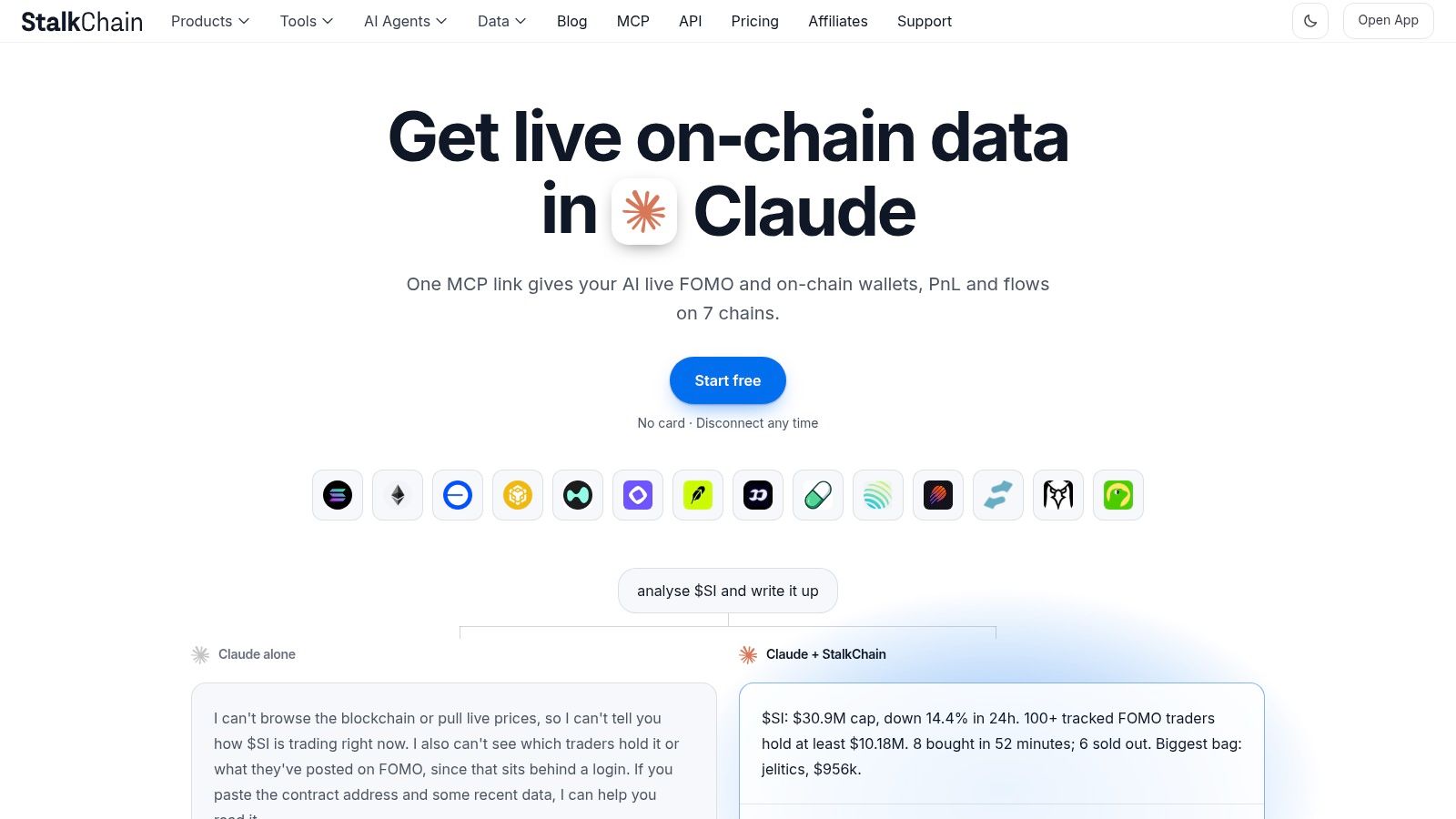
Best for AI-assisted wallet research and tracked-trader monitoring. StalkChain fits questions that combine holdings, trader identity, token flows, and performance. Instead of asking an assistant to infer current positions from search results, you connect it to tools that retrieve the underlying information.
Our hosted MCP server lets supported AI assistants query wallets, traders, holdings, and flows in plain English. Developers can use the REST API for applications, scripts, and dashboards, with both access methods drawing from the same account and credit balance. That's useful when an analyst explores a question conversationally before a developer turns it into a recurring report.
Coverage includes Solana, Robinhood Chain, Base, BNB Chain, Ethereum, Monad, and Hyperliquid, although availability varies by tool. The toolkit combines wallet analysis, realized and unrealized PnL, KOL activity, whale monitoring, transaction exploration, and specialized feeds such as Jupiter DCA tracking.
Where the trade-off matters
The important distinction is accessible data versus complete evidence. A trader profile or leaderboard helps prioritize investigation, but it doesn't establish wallet ownership or guarantee that every historical position has been captured. Check the returned scope before describing a trader's record as thorough.
- Budget the workflow: Our Starter plan costs $29 per month, whether billed monthly or annually, with annual billing totaling $348.
- Choose targeted calls: The full live trader-profile resolver advertises 2,500 credits per call. Don't request a broad profile when a narrower lookup answers the question.
- Keep research isolated: Read-only research tools don't require private keys. Trading credentials shouldn't be part of a wallet-analysis workflow.
The main advantage is consistent access from chat and code. The limitation is that tool-level coverage and upstream history still bound the answer, however fluent the assistant sounds.
2. Arkham Intelligence
Where did the funds go, and which entity might control the destination? That's the question Arkham Intelligence is built to investigate. Searchable address and entity pages, transaction histories, portfolio views, and a network visualizer make it useful when you're following counterparties rather than screening a trader leaderboard.
Start with an address you can verify. Inspect its counterparties, expand relevant relationships, and preserve the transactions supporting your interpretation. The visualizer helps organize a complicated path, but the graph shouldn't replace the transaction evidence underneath it.
Investigation rule: A connection between addresses establishes a relationship worth inspecting, not necessarily common ownership.
Arkham's free access is useful for initial exploration. More advanced investigation capabilities, including full transaction history, filtering, and professional tracing, sit behind Enterprise access. Consult the Arkham pricing guide before designing a workflow around features you may not have.
The decisive trade-off is investigation depth versus access requirements. An occasional researcher may get enough context from free pages, while a team maintaining detailed cases needs to evaluate Enterprise terms.
Arkham is less suitable when your main requirement is a custom, reproducible cohort metric. It helps you examine a suspected entity's activity, but you still need to separate platform attribution from independently verified identity. Shared infrastructure, custodians, and exchange wallets deserve particular caution.
3. Dune
Choose Dune when you need to define the metric yourself. If your question is whether buyers retained a token after an incentive campaign, a wallet label won't answer it. You need explicit rules for qualifying purchases, excluding transfers, and measuring subsequent balances.
Dune gives analysts SQL access to blockchain datasets, community queries, dashboards, and programmatic access. Its strongest advantage is inspectability: another analyst can examine the query rather than accepting a proprietary score without knowing its assumptions.
Customization means owning the analysis
A useful starting dashboard isn't necessarily a finished research model. Read the joins, examine token decimals, check table freshness, and confirm that the query covers the intended chain and protocol.
- What works: Bespoke token-flow analysis, historical cohorts, protocol dashboards, and metrics with clearly defined inclusion rules.
- What takes work: SQL development, query maintenance, performance tuning, and resolving missing or incorrectly decoded activity.
- What affects cost: Compute, refreshes, exports, API usage, and whether your work requires private dashboards or commercial redistribution rights.
The free offering is described as view-only, so don't assume an older tutorial's query-execution allowance still applies. The Dune pricing guide explains the plan distinctions worth checking.
The trade-off is control versus maintenance. Dune is a strong Nansen alternative for analysts who need reproducible definitions, but it won't remove the responsibility to validate those definitions.
4. DeBank
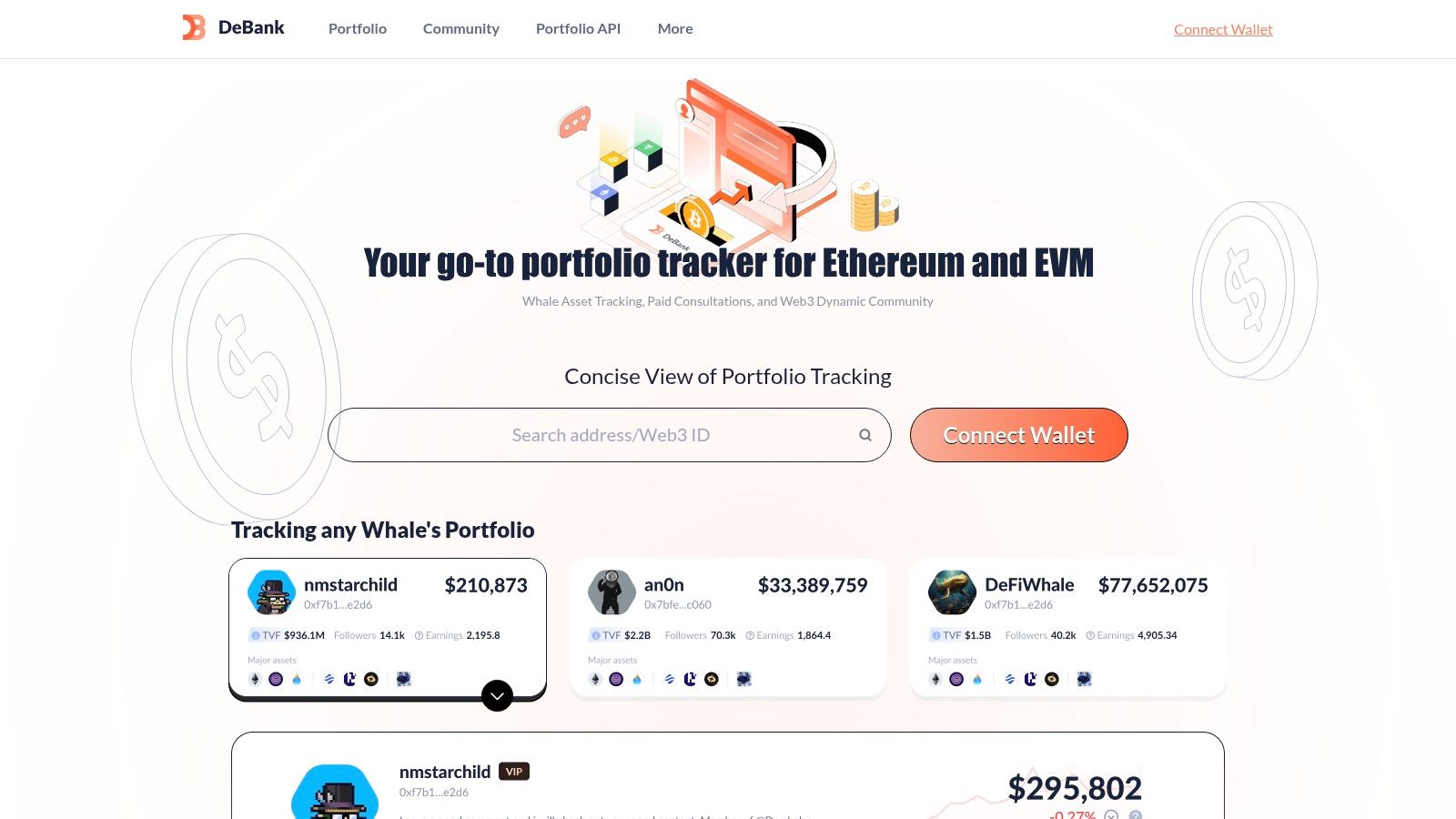
A wallet can look inactive while its owner still has exposure through lending markets, liquidity positions, and staking contracts. DeBank is useful when your immediate question is what a wallet holds across supported EVM networks and DeFi protocols.
Its portfolio views bring positions together, while public profiles and account bundles make groups of addresses easier to monitor. That's a different job from discovering profitable traders: you generally start with the wallet or collection of wallets you want to understand.
For portfolio review, inspect the position breakdown rather than stopping at the headline value. Check which assets are supplied, which are borrowed, and whether a displayed position depends on a protocol integration that needs independent verification.
- Portfolio advantage: Holdings and supported DeFi positions appear together instead of requiring a separate explorer session for each network.
- Research limitation: Portfolio visibility isn't equivalent to reliable trader ranking or KOL discovery.
- Developer distinction: DeBank Cloud is a separate offering from the consumer experience, so website access doesn't establish your API entitlements.
Paid features add historical comparisons and transaction-history analysis, while core tracking is available without a paid subscription.
The trade-off is convenient portfolio aggregation versus integration-dependent completeness. A missing position shouldn't automatically be interpreted as an empty position. For material exposure, reconcile the portfolio view against the protocol interface and the relevant on-chain records.
5. Bubblemaps
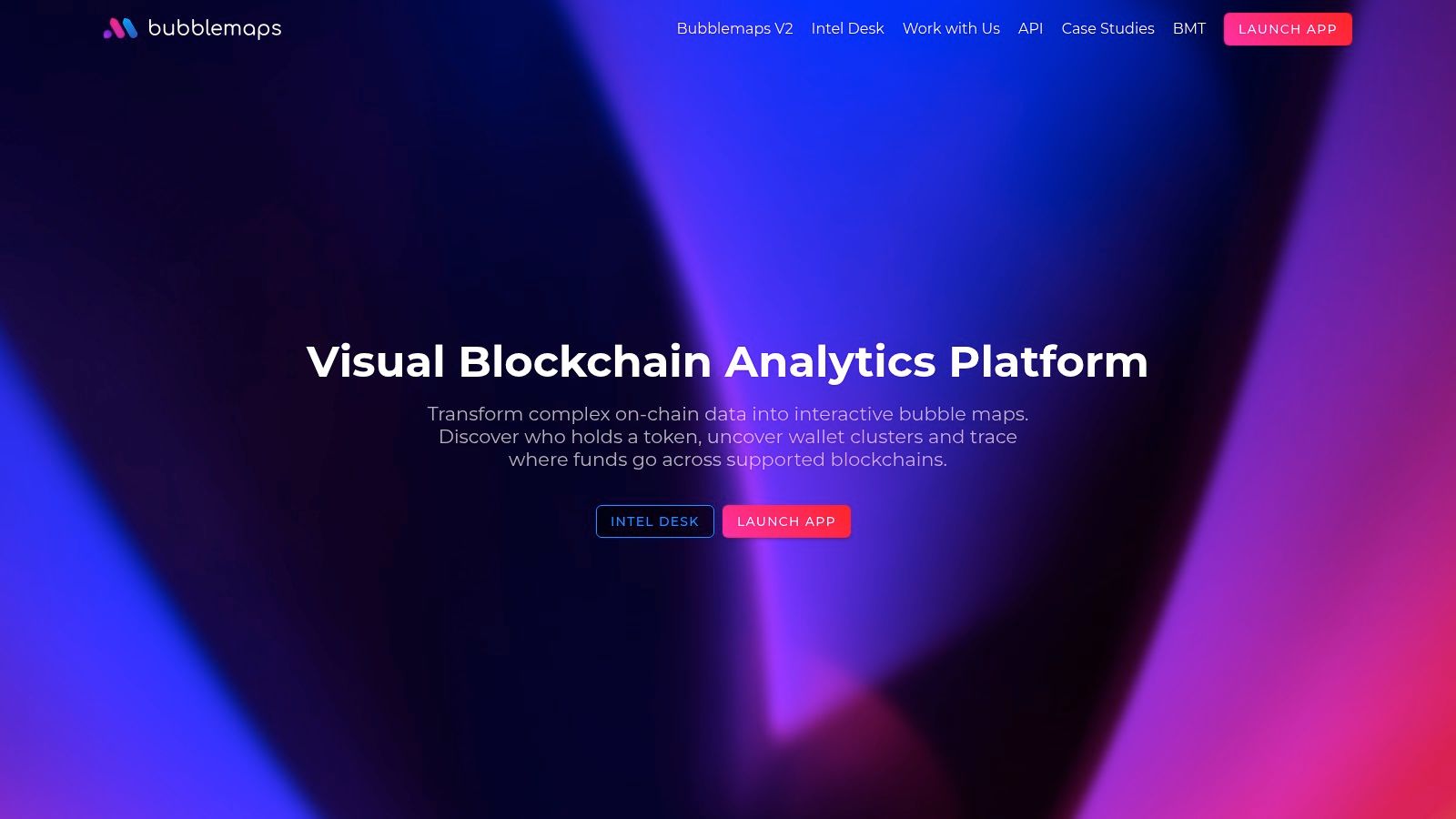
A long holder list can hide a concentrated distribution. Bubblemaps makes token-holder relationships easier to inspect by presenting wallets and connections visually. It's particularly useful during token due diligence, when you want to investigate whether apparently separate large holders have interacted.
Use the map to choose where to investigate next. Open connected wallets, examine their transfers, and distinguish distribution activity from purchases. A cluster involving a liquidity pool or service wallet needs a different interpretation from a cluster of wallets funded and supplied through a suspicious pattern.
Connected holders are a reason to investigate token distribution, not a verdict that the project's insiders control every connected wallet.
That distinction matters because attribution is an inference. The Proof of Talk guide to on-chain analytics explains why wallet ownership generally can't be established without disclosure and why cross-platform validation matters.
Bubblemaps also offers API access for teams integrating holder maps and related data. Evaluate the permitted usage and quotas against your intended token-screening workflow rather than treating interactive exploration and production access as interchangeable.
The trade-off is visual clarity versus analytical scope. Bubblemaps can reveal distribution questions that a portfolio screen makes hard to notice. It isn't a full wallet-history, PnL, or multi-chain portfolio replacement, and its strongest role is often as a complementary check.
6. GMGN
GMGN puts wallet monitoring next to token activity and trading controls. That arrangement suits a trader watching fast-moving token markets who wants to move from a followed wallet's activity to the relevant token page without rebuilding the context elsewhere.
The appeal is workflow proximity. Wallet pages, trader information, token charts, and trading features sit in a trading-oriented interface. Bulk wallet import and export also help if you already maintain a watchlist rather than relying entirely on platform discovery.
Research signals aren't execution instructions
A platform-defined smart-money tag doesn't tell you whether a trade is still attractive at your available price. Check position size, remaining holdings, liquidity, and whether the apparent purchase was a transfer.
- Use it for: Monitoring followed wallets and inspecting token activity in an execution-oriented workspace.
- Treat cautiously: KOL labels, performance summaries, and assumptions that a visible transaction can be copied economically.
- Separate the risks: A correct wallet signal can still lead to a poor trade because of slippage, delayed entry, or insufficient exit liquidity.
The GMGN trading fees guide is useful when comparing the cost of acting on a signal, not just viewing it.
The trade-off is speed of action versus research separation. GMGN can fit memecoin monitoring, but analysts who want strictly read-only investigation may prefer a tool without execution controls in the same workflow. Copy-trading adds risk rather than validating the original thesis.
7. Cielo
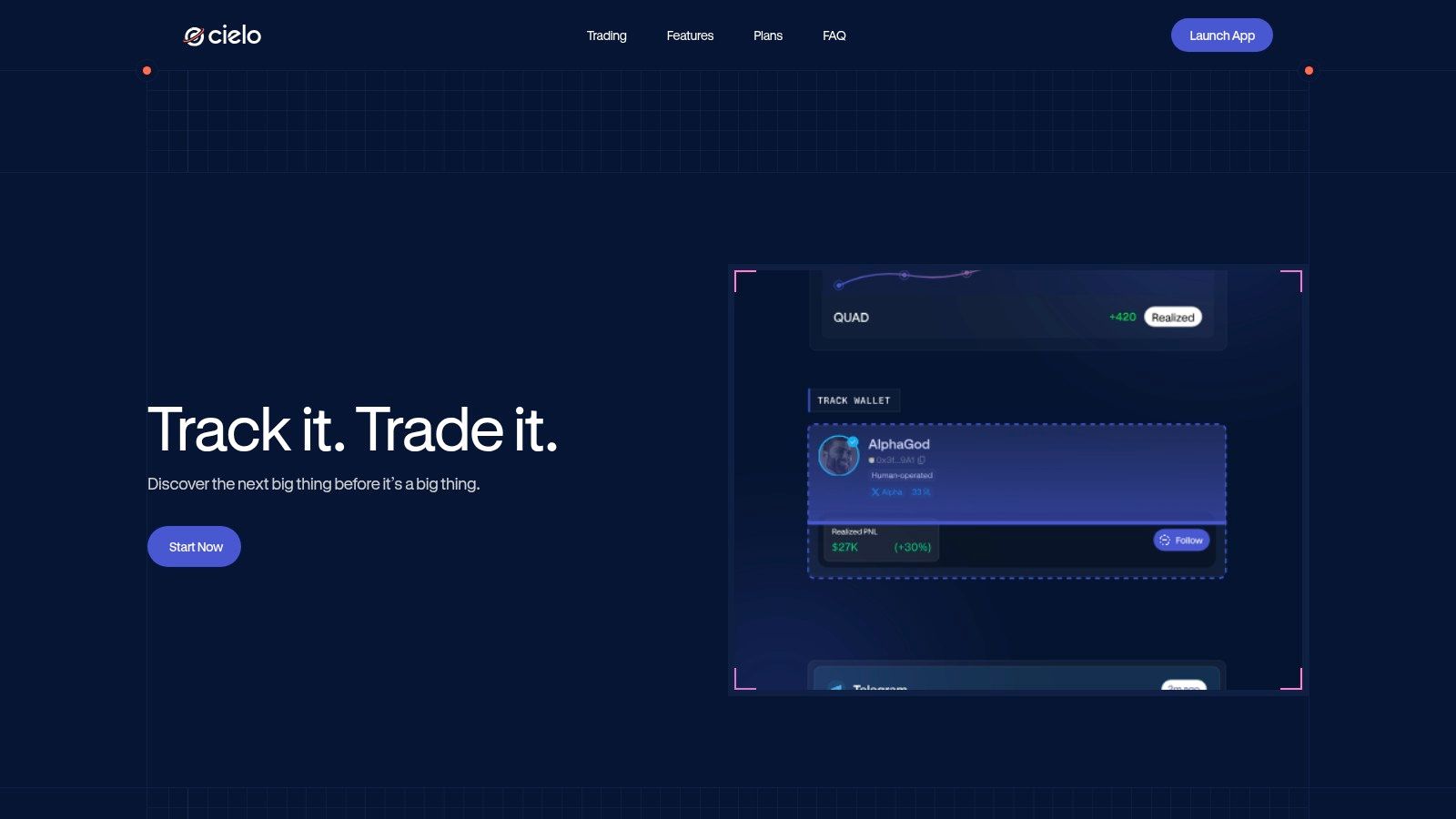
If you already know which addresses matter, another dashboard may be less useful than a well-filtered alert. Cielo focuses on wallet tracking and activity notifications, with a web app and messaging integrations for Telegram and Discord.
That makes it suitable for ongoing monitoring rather than a broad replacement for Nansen's labeling and analytical interfaces. You can follow known wallets, organize lists, and use paid discovery features to expand your watchlist.
The practical challenge is deciding what deserves an interruption. A feed containing every transfer can become difficult to use, especially when watched wallets interact with contracts frequently. Define the event you care about before adding more addresses.
- Monitor intentionally: Separate new-token purchases, position reductions, and large transfers into different research questions.
- Check tier boundaries: Wallet allowances and Solana tracking limits vary by subscription.
- Confirm API access: Developer access belongs to the documented Whale offering rather than basic free tracking.
Current pricing should be checked in the subscription screen, where the available account entitlements are clearer than a general feature summary.
The trade-off is convenient delivery versus analytical depth. Cielo helps you notice activity without keeping a dashboard open. It doesn't remove the need to open the transaction, verify its meaning, and decide whether the alert changes your view of the wallet.
8. Solscan
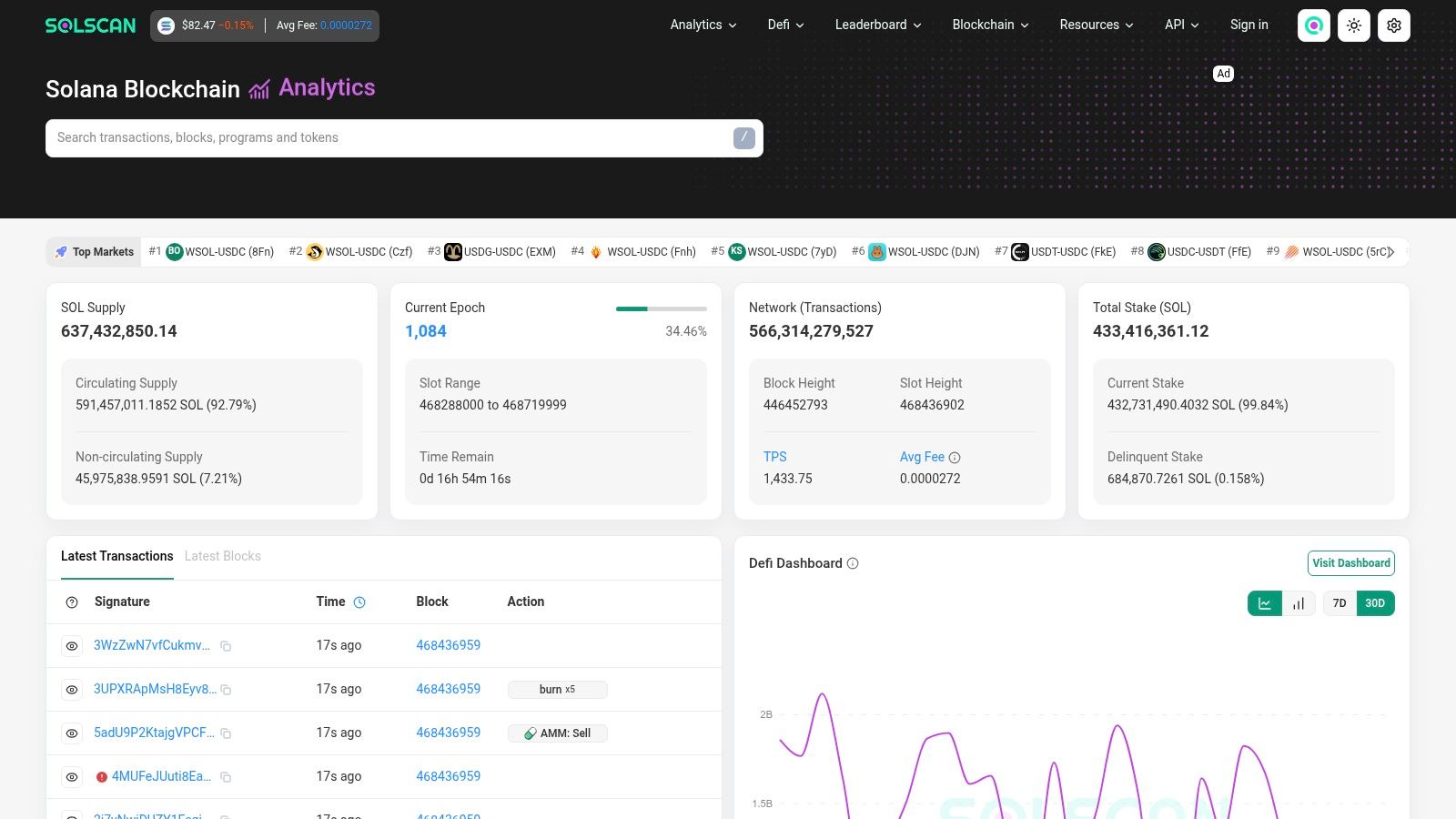
Sometimes the correct next step isn't another score. It's opening the transaction. Solscan is a Solana-focused explorer with wallet analytics, useful for checking the underlying activity behind a claim from a leaderboard, alert, or AI-generated report.
Account and token pages provide access to transactions, transfers, balance trends, and inflow or outflow context. Funding relationships and account classifications can help you identify which records deserve closer inspection.
Verification habit: When a report says a wallet bought a token, inspect the transaction's asset movements before accepting the summary.
A token appearing in an address doesn't, by itself, establish a market purchase. Check the transaction instructions, the assets exchanged, and the relevant accounts. For complex interactions, inspect the program activity rather than relying only on the transfer label.
Explorer access and API access differ
The core explorer is free, while Premium adds capabilities such as broader indexed historical activity. The Pro API is a separate product, so a website subscription shouldn't be treated as permission or capacity for an automated application.
The trade-off is chain-specific verification versus cross-chain breadth. Solscan is a useful companion to other analytics tools when your evidence is on Solana. It won't consolidate a trader's activity across unrelated networks, and account labels still need to be distinguished from the transactions you can directly inspect.
9. Glassnode
Is this asset's broader on-chain behavior changing? Glassnode fits that question better than a search for an individual KOL wallet. Its emphasis is market-wide on-chain metrics, charting, market data, derivatives data, and investment research.
For an analyst assessing conditions around a position, aggregate metrics can provide context that a wallet feed doesn't. The important discipline is matching the metric's definition and update frequency to the decision you're making. A slowly updated series shouldn't be treated as an immediate trading signal.
Glassnode Studio supports chart-based research, while data downloads, API access, and MCP capabilities depend on the relevant plan and entitlements. Don't assume that access to a chart means the same data is available programmatically or licensed for redistribution.
- Strong fit: Asset-level research, longer-horizon analysis, and comparing defined market metrics.
- Weak fit: Discovering individual profitable traders, following KOL positions, or investigating a named wallet owner.
- Buying consideration: Check asset coverage, metric resolution, API availability, and commercial rights separately.
The trade-off is aggregate context versus address-level detail. Glassnode can help you assess the environment surrounding a trade, but it doesn't answer whether a particular wallet's label is correct or whether a specific trader still holds a token.
Use it when your missing information concerns market conditions, not when you primarily need a substitute wallet-labeling database.
10. Zerion
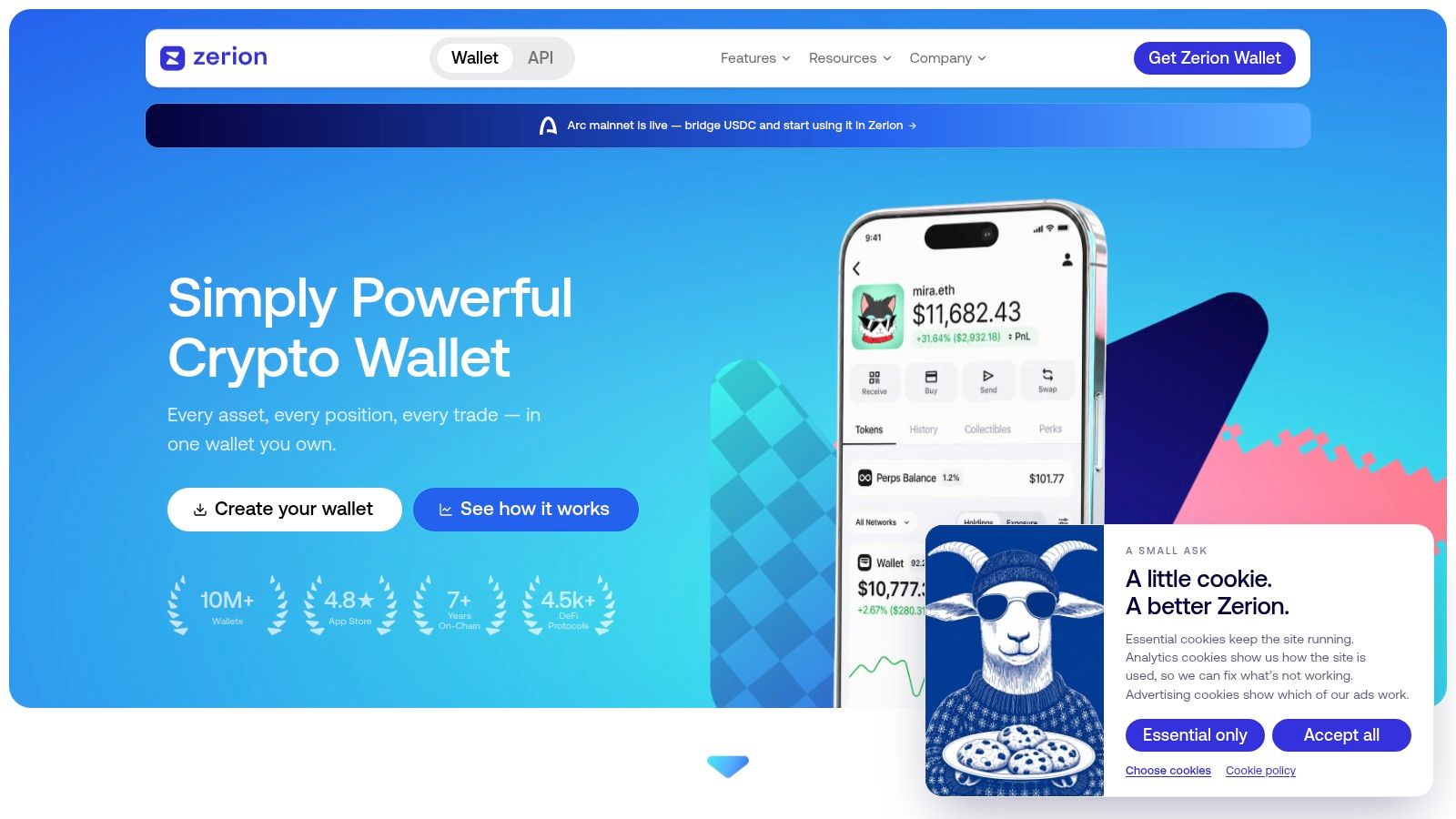
Zerion is a portfolio-centric choice for tracking holdings, activity, and performance across supported networks. It's useful when your research begins with your addresses or a defined portfolio, rather than a search for influential traders.
The consumer product combines portfolio views with wallet activity and transaction history. Premium features add deeper performance reporting and historical exports, while the REST API supports developers building wallet and portfolio applications.
Check what the PnL actually measures
A portfolio performance figure needs a clear accounting interpretation. Transfers between your own wallets, bridged assets, missing acquisition history, and unpriced tokens can complicate the result. Compare the displayed position with its transaction history before treating the PnL as a complete investment record.
For a developer, the evaluation should go beyond whether an endpoint returns balances. Check pagination, historical coverage, DeFi position representation, and how incomplete or unavailable values are represented.
- Consumer fit: Reviewing multi-network holdings and wallet activity without building a custom dashboard.
- Developer fit: Integrating portfolio, transaction, position, and PnL data into an application.
- Boundary: Consumer subscriptions and API access have separate commercial considerations.
The trade-off is portfolio convenience versus discovery depth. Zerion can replace the portfolio portion of a Nansen workflow, but smart-money cohorts, KOL monitoring, and performance-ranked trader discovery aren't its central purpose. Choose it for exposure and accounting questions, not as a universal investigation platform.
How the main Nansen alternatives compare on price, access, and fit
| Item | Starting price | Free access | Best for | Main trade-off |
|---|---|---|---|---|
| StalkChain (recommended) | $29/month | Up to $5 in conditional credit for eligible new accounts | Cross-chain wallet, trader, and token-flow research through MCP or REST | Paid plans are needed for ongoing use; data coverage varies by tool |
| Arkham Intelligence | Enterprise pricing is customized | Limited free access | Investigating entities, addresses, and fund flows | Full history, filtering, and Tracer 2.0 require Enterprise |
| Dune | Free view-only; Analyst is $65/month | View-only access | Custom on-chain analytics using SQL and dashboards | Custom research often requires SQL knowledge |
| DeBank | VIP is $15 for one month | Core tracking is free | Tracking multi-chain portfolios and DeFi positions | Focuses on portfolios, not trader discovery or ranked signals |
| Bubblemaps | API Starter is $170/month | Token maps are available to explore | Visualizing token-holder concentration and wallet connections | Not a general-purpose wallet history or portfolio analytics tool |
| GMGN | Not specified | Not specified | Trading-focused wallet and token monitoring, especially for memecoins | Trading and copy-trading carry execution and loss risks |
| Cielo | Check current subscription pricing | Track up to 250 wallets, including 10 Solana wallets | Alerts for known or discovered wallets | Broad custom querying and API access require higher tiers |
| Solscan | Core explorer is free | Free core explorer | Investigating Solana transactions, accounts, and tokens | Solana-only coverage; API access is separate |
| Glassnode | Advanced is $49/month billed annually | Not specified | Market-wide on-chain metrics and investment research | Not primarily designed for wallet or KOL tracking |
| Zerion | Premium is $99/year | Not specified | Multi-network portfolio and wallet tracking | Smart-money discovery and trader leaderboards are not its focus |
Matching the Tool to Your Research Job
The best Nansen alternative is the tool that answers your recurring question with the least unsupported interpretation. You don't need to replace every capability if you only use a narrow part of the incumbent platform. Keeping Nansen while adding a specialist can be more practical than forcing a complete migration.
For entity investigation, shortlist Arkham and preserve the transaction evidence behind each attribution. For token due diligence, use Bubblemaps to inspect holder relationships, then investigate the connected addresses. For portfolio tracking, compare DeBank and Zerion using addresses that contain the protocols and assets you hold.
Your technical requirements should determine the next branch of the decision. Dune fits bespoke metrics and inspectable SQL, while Glassnode fits aggregate market research. GMGN and Cielo suit different monitoring habits, Solscan supports direct Solana verification, and an AI-connected data service fits conversational investigation and application development.
- Compare the same question: Use the same wallet, chain, token, observation time, and requested history window across your shortlist.
- Record missing evidence: Mark unavailable cost basis, incomplete history, unresolved ownership, and unsupported protocols explicitly.
- Price the completed task: Include pagination, enrichment, retries, exports, and recurring refreshes, not just the subscription.
- Verify the conclusion: Reconcile a meaningful transaction or position against the appropriate explorer or protocol records.
For API and agent workflows, measure successful completion, freshness, attribution coverage, and cost per validated report. The Dataintelo on-chain analytics market report identifies API-based feeds as an adoption driver, but that doesn't establish that any particular connector will satisfy your workflow. Run the same question through chat and code, and compare returned fields and errors.
Security also belongs in the buying decision. Times Now's reporting on MCP in agentic finance highlights the distinction between authenticating a caller and deciding whether an action is appropriate. Keep research credentials read-only, isolate trading permissions, and retain timestamps and request logs.
Test a small shortlist on a real wallet before committing, and check current pricing directly with each vendor. Independently verify entity and smart-money labels before acting on them. A useful analytics tool should make uncertainty visible, not hide it behind a confident ranking.
Our MCP server and REST API bring wallet holdings, realized and unrealized PnL, token flows, and KOL and whale activity into AI-assisted research and applications. Visit StalkChain to test a wallet you already understand, compare the returned evidence, and evaluate whether the workflow fits your research needs.